Ditapis dengan

e-Book - Generative AI with LangChain: Build large language model (LLM) apps …
Buku ini merupakan panduan praktis untuk membangun aplikasi berbasis Model Bahasa Besar (Large Language Models / LLM) seperti ChatGPT menggunakan pemrograman Python dan framework LangChain. Ditulis oleh Ben Auffarth, pembahasan di dalamnya mencakup teknik integrasi API model bahasa, rekayasa perintah (prompt engineering), pembuatan agen cerdas (AI agents), pencarian semantik dengan vector datab…
- Edisi
- Ed. 1 (First Edition)
- ISBN/ISSN
- 978-1-83508-346-8
- Deskripsi Fisik
- 376 halaman ; 23,5 cm x 19,05 cm : ilustrasi
- Judul Seri
- -
- No. Panggil
- 006.31 AUF g

e-Book - Deep Learning Illustrated: A Visual, Interactive Guide to Artificial…
Buku ini merupakan panduan visual dan interaktif mengenai kecerdasan buatan (artificial intelligence) khususnya deep learning. Dilengkapi dengan ilustrasi berwarna yang mempermudah pemahaman, buku ini menyajikan teori dasar, analogi intuitif, serta implementasi praktis menggunakan bahasa pemrograman Python dan pustaka populer seperti Keras, TensorFlow, dan PyTorch. Sangat cocok untuk pengembang…
- Edisi
- Ed. 1 (First Edition)
- ISBN/ISSN
- 9780135116869
- Deskripsi Fisik
- 416 halaman ; 23,19 cm x 17,78 cm
- Judul Seri
- Addison-Wesley Data & Analytics Series
- No. Panggil
- 006.32 KRO d
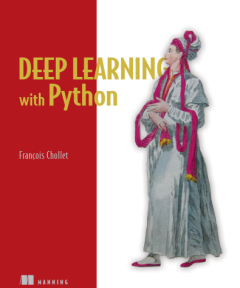
e-Book - Deep Learning with Python (First Edition)
Buku ini merupakan panduan komprehensif untuk mempelajari bidang pembelajaran mendalam (deep learning) menggunakan bahasa pemrograman Python dan pustaka (library) Keras. Ditulis langsung oleh pencipta Keras dan peneliti AI dari Google, François Chollet, buku ini membangun pemahaman pembaca melalui penjelasan yang intuitif serta contoh-contoh praktis. Fokus pembahasan mencakup pengenalan konsep…
- Edisi
- Ed. 1 (First Edition)
- ISBN/ISSN
- 9781617294433
- Deskripsi Fisik
- 384 halaman ; 23,5 cm x 18,75 cm : ilustrasi
- Judul Seri
- -
- No. Panggil
- 006.31 CHO d
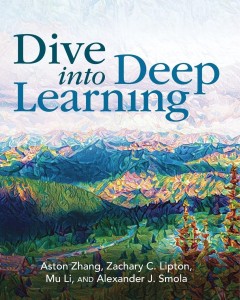
e-Book - Dive into Deep Learning
Buku ini merupakan salah satu buku teks paling populer di dunia untuk mempelajari kecerdasan buatan yang memadukan teori matematika matematika dasar, algoritma, dan praktik pemrograman secara langsung. Keunggulan utama dari buku ini adalah menyertakan kode pemrograman yang dapat langsung dijalankan (runnable code) menggunakan berbagai framework besar seperti PyTorch, TensorFlow, JAX, dan NumPy.…
- Edisi
- First Edition (Edisi Pertama)
- ISBN/ISSN
- 978-1009389433
- Deskripsi Fisik
- 883 halaman; 25,4 cm x 20,3 cm
- Judul Seri
- -
- No. Panggil
- 006.32 ZHA d
e-Book - Understanding Deep Learning
Buku ini merupakan buku teks komprehensif yang menjembatani celah antara teori matematika dan praktik implementasi dalam pembelajaran mendalam (deep learning). Ditulis dengan pendekatan yang intuitif, buku ini membahas dasar-dasar machine learning, arsitektur jaringan saraf tingkat lanjut, hingga topik mutakhir seperti transformers, diffusion models, generative adversarial networks (GANs), dan …
- Edisi
- First Edition (Edisi Pertama)
- ISBN/ISSN
- 978-0262377102
- Deskripsi Fisik
- 544 halaman; 23,6 cm x 21 cm
- Judul Seri
- -
- No. Panggil
- 006.32 PRI u

e-Book - Deep Learning with TensorFlow and Keras: Build and deploy supervised…
Buku ini merupakan panduan praktis untuk mempelajari jaringan saraf (neural networks) dan teknik pembelajaran mendalam (deep learning) menggunakan ekosistem TensorFlow 2.x dan Keras API. Di dalamnya dibahas berbagai implementasi model supervised, unsupervised, deep, hingga reinforcement learning melalui contoh-contoh aplikatif untuk lingkungan cloud, perangkat mobile, maupun sistem produksi ska…
- Edisi
- Third Edition (Edisi ke-3)
- ISBN/ISSN
- 978-1803245713
- Deskripsi Fisik
- 698 halaman; 23,5 cm x 19,05 cm
- Judul Seri
- -
- No. Panggil
- 006.32 KAP d
e-Book - Deep Learning
Buku ini menawarkan landasan matematika dan konseptual yang sangat kuat mengenai pembelajaran mendalam (deep learning). Isi buku dibagi menjadi tiga bagian besar: Matematika Terapan & Dasar-dasar Machine Learning; Jaringan Praktis Modern (termasuk Deep Feedforward Networks, Convolutional Networks, dan Sequence Modeling); serta Perspektif Riset Deep Learning (faktor linear, autoencoders, hingga …
- Edisi
- First Edition
- ISBN/ISSN
- 978-0262337373
- Deskripsi Fisik
- 00 halaman; 23,11 × 18,29 cm
- Judul Seri
- Adaptive Computation and Machine Learning Series
- No. Panggil
- 006.31 GOO d
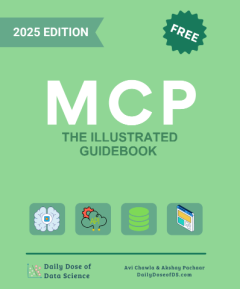
e-Book - MCP: The Illustrated Guidebook
Buku panduan ini mengupas tuntas revolusi Model Context Protocol (MCP), sebuah standar terbuka yang bertindak layaknya sakelar universal (USB-C) bagi ekosistem AI. Buku ini memandu para insinyur AI dan ilmuwan data untuk menghubungkan model bahasa besar (LLM) dengan sumber data eksternal, arsitektur server, dan ekosistem perkakas pengembang secara aman. Sangat cocok untuk dibaca oleh praktisi y…
- Edisi
- 2025 Edition
- ISBN/ISSN
- -
- Deskripsi Fisik
- 74 halaman;
- Judul Seri
- Daily Dose of Data Science Illustrated Series
- No. Panggil
- 006.3 CHA m

e-Book - The State of AI in 2025: Agents, Innovation, and Transformation
Laporan ini menguraikan kondisi adopsi kecerdasan buatan global pasca tiga tahun rilisnya Generative AI. Data menunjukkan bahwa meski 88% organisasi telah menggunakan AI di setidaknya satu fungsi bisnis, mayoritas (sekitar dua pertiga) masih tertahan di fase eksperimen atau pilot proyek, dan baru 33% yang berhasil melakukan penskalaan (scaling). Laporan ini juga mengeksplorasi bagaimana 6% peru…
- Edisi
- 2025 Edition
- ISBN/ISSN
- -
- Deskripsi Fisik
- Judul Seri
- McKinsey Global Survey / Insights on Artificial Intelligence
- No. Panggil
- 006.3072 MCK t

e-Book - Artificial Intelligence for Big Data: Complete guide to automating B…
Buku ini menjembatani dua domain teknologi besar, yaitu Artificial Intelligence (AI) dan Big Data. Penulis memandu pembaca langkah demi langkah untuk mengotomatisasi solusi analisis data menggunakan teknik AI tingkat lanjut seperti Deep Learning, Natural Language Processing (NLP), dan pengenalan pola. Buku ini sangat cocok untuk ilmuwan data (data scientists) dan profesional IT yang ingin mengo…
- Edisi
- First Edition (Edisi Pertama)
- ISBN/ISSN
- 978-1788472173
- Deskripsi Fisik
- 384 halaman; 23,5 × 19,05 cm
- Judul Seri
- -
- No. Panggil
- 006.3028557 DES a
 Karya Umum
  Filsafat
  Agama
Agama  Ilmu-ilmu Sosial
  Bahasa
  Ilmu-ilmu Murni
  Ilmu-ilmu Terapan
  Kesenian, Hiburan, dan Olahraga
  Kesusastraan
  Geografi dan Sejarah